Grandparenting Has Changed. Are You Ready?
Why staying strong, setting boundaries, and communicating with adult children matter more than ever
Grandparenting isn’t what it used to be.
Think about the grandparents you knew growing up. Maybe they lived nearby, hosted Sunday dinners, baked cookies, or watched the kids occasionally. They were an important part of family life, but the expectations surrounding their role were often very different from what families experience today.
Now, grandparents are traveling with grandchildren, attending sporting events, helping with childcare, staying connected through technology, and finding new ways to be involved in their families’ everyday lives.
And while that’s wonderful, it also raises an important question.
Are we preparing ourselves to be the grandparents we want to become?
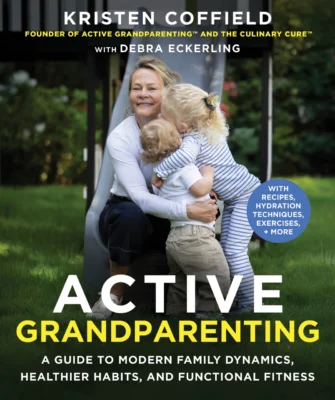
That’s exactly what I explored in my latest episode of Living Ageless and Bold with Kristen Coffield, wellness expert, founder of the Active Grandparenting movement, and coauthor of Active Grandparenting.
I’m not a grandmother yet, although I certainly hope to be one someday! But this conversation made me realize that preparing for grandparenthood isn’t something we should wait to think about until a baby arrives.
It’s about the way we’re living right now.
And whether you’re already a grandparent, hoping to become one, or simply interested in staying strong and connected as you age, Kristen has some wonderful insights to share.
This Isn’t Our Parents’ Grandparenting
One of my favorite moments from our conversation was when Kristen compared modern grandparenting to returning to a job you held 35 years ago.
Imagine walking into your old workplace after three decades and assuming you knew exactly how everything operated.
You’d probably be in for quite a surprise!
Technology would have changed. Expectations would be different. The way people communicated and worked together might look completely unfamiliar.
Kristen says the same thing is happening with grandparenting.
“This is not our parents’ grandparenting. This is a whole new game.”
And she’s right.
Think about how much has changed since we were raising our own children.
We have smartphones, video calls, social media, new parenting philosophies, different approaches to nutrition, and evolving expectations about family involvement.
Parents have access to information that wasn’t readily available a generation ago. They’re making decisions based on their own research, experiences, and values.
Meanwhile, grandparents bring decades of life experience and parenting knowledge to the relationship.
Both perspectives have value.
The challenge is learning how to bring them together without creating unnecessary tension.
Because today’s grandparenting experience isn’t simply about knowing how to care for a baby.
It’s also about understanding how families have evolved.
Are You Physically Ready to Be a Grandparent?
Here’s something I hadn’t given much thought to before talking with Kristen.
Grandparenting can be physically demanding!
Think about the everyday activities involved in spending time with young grandchildren.
Getting down on the floor to play. Picking up a toddler. Carrying a child up the stairs. Pushing a stroller. Chasing little ones around the backyard. Traveling together. Lifting a grandchild out of a crib.
These are things we may have done without thinking twice when we were younger.
But as we age, they can require more strength, balance, and mobility than we realize.
Kristen brought this point home with a video that went viral.
In it, she demonstrated how to get up from the floor while holding her grandchild, without using her hands.
Millions of people watched.
Why did something so simple resonate with so many?
Because it made people stop and think.
Could I do that?
Could I safely get up from the floor while holding a child?
Would I have the strength and balance to manage it?
It’s an important question, not because every grandparent needs to perform that exact movement, but because it highlights the everyday physical abilities that help us remain active and independent.
For me, this was one of the biggest takeaways from our conversation.
We shouldn’t wait until we need that strength to start building it.
Functional Fitness Matters More Than Ever
We hear a lot about exercise as we get older.
Walk more. Get your steps in. Join a gym. Take a fitness class.
Those can all be wonderful activities.
But Kristen encourages us to think about something called functional fitness.
Functional fitness focuses on movements that help us perform everyday activities safely and comfortably.
Instead of exercising only to reach a number on the scale or change how our bodies look, we’re building the strength and mobility we need to live the lives we want.
For grandparents, that might mean being able to pick up a child, carry groceries, get up from the floor, or walk comfortably through a park.
For the rest of us, it might mean lifting a suitcase into an overhead compartment, carrying laundry upstairs, gardening, or getting in and out of a car with ease.
The goals are different, but the principle is the same.
We want our bodies to support our lives, not limit them.
Strength training becomes particularly important as we age because we naturally tend to lose muscle mass over time.
Building and maintaining muscle helps support everyday movement, balance, and independence.
That doesn’t mean everyone needs to lift heavy weights or become a fitness enthusiast.
A good routine might include appropriately challenging resistance exercises, balance practice, walking, and movements that improve flexibility and mobility.
The important thing is finding activities suited to your abilities and building consistency.
If you’re unsure where to begin, a qualified fitness professional or physical therapist can help you develop a safe plan.
And if you’re already exercising, think about whether your routine is preparing you for the activities you actually want to enjoy.
I love that way of looking at fitness.
It’s not about trying to look 30 again.
It’s about being able to do more at 60, 70, 80, and beyond.
Staying Healthy Starts Long Before Grandchildren Arrive
One thing I especially appreciated about Kristen’s message is that active grandparenting isn’t just for people who already have grandchildren.
It’s a mindset.
If we want to be active, involved grandparents someday, the choices we make now matter.
And even if grandchildren aren’t part of our future, those choices still benefit us.
Kristen and I talked about the importance of nutrition, physical activity, hydration, and the everyday habits that support healthy aging.
None of these things is particularly glamorous.
There isn’t one magic exercise or perfect food that guarantees we’ll remain healthy forever.
Instead, it’s about consistently taking care of ourselves.
Eating a balanced diet, including adequate protein, staying hydrated, maintaining muscle strength, and making movement part of our routines can help support our health as we age.
And it’s never too late to work on those habits.
I think sometimes women over 50 get caught up in the idea that we should have started sooner.
We look back and think about the years we didn’t exercise regularly or the times we put everyone else’s needs ahead of our own.
But what matters most is what we choose to do next.
We can start making changes today.
For me, that’s one of the most empowering messages about aging.
We’re not simply watching the years pass.
We can take an active role in shaping how we experience them.
Grandparenting Is About Relationships, Too
Of course, being an active grandparent involves much more than physical fitness.
One of the most interesting parts of my conversation with Kristen was our discussion about family dynamics.
Because here’s something many of us discover when our children become adults.
Our relationship with them changes.
When they’re little, we’re responsible for nearly everything.
We make the rules. We decide what’s best. We organize their schedules, manage their activities, and guide their decisions.
Then they grow up.
They become independent adults with their own opinions, priorities, and ways of doing things.
And if they become parents, they’re suddenly making decisions about their own children.
That can be a significant adjustment for everyone.
As parents, we may have years of experience and plenty of advice we’d love to share.
But our adult children may not always want that advice.
And even when we have the best intentions, our involvement can sometimes feel like interference.
Kristen believes understanding these changing dynamics is essential to building strong relationships across generations.
It requires flexibility, respect, and a willingness to recognize that our role has evolved.
We don’t stop being parents when our children become adults.
But we do have to learn a different way of parenting.
And grandparenthood adds another layer to that relationship.
Why Boundaries Can Actually Bring Families Closer
One of Kristen’s most memorable observations was this.
“Boundaries can be bridges.”
I love that!
We often think of boundaries as something negative.
We imagine someone putting up a wall or telling us what we can’t do.
But healthy boundaries can actually make relationships stronger.
When everyone understands expectations, there’s less room for confusion and resentment.
For example, adult children may have specific preferences about screen time, bedtime routines, nutrition, or how they want their children disciplined.
Grandparents may have their own ideas based on how they raised their families.
Neither generation necessarily has to agree on every detail.
But it’s important to understand and respect the parents’ decisions.
And boundaries work both ways.
Grandparents also have their own lives, responsibilities, schedules, and limitations.
Some may be happy to provide regular childcare. Others may prefer occasional visits or special outings.
Some may be physically capable of watching energetic toddlers for an entire weekend. Others may need shorter visits or additional support.
Being a loving grandparent doesn’t mean being available around the clock.
Clear expectations help everyone understand what is realistic.
When boundaries are communicated with kindness and respect, they can create the foundation for more enjoyable relationships.
Instead of guessing what everyone wants, families can have honest conversations.
And that’s where Kristen’s advice becomes especially valuable.
Learning to Have Difficult Conversations
Let’s face it.
Family relationships can be complicated.
Even in the closest families, disagreements happen.
And when multiple generations are involved, those disagreements can become emotional very quickly.
A grandparent might feel hurt because their advice wasn’t appreciated.
An adult child might feel criticized because a parent questions their decisions.
Someone might interpret a simple request as rejection.
Before long, a small misunderstanding can become a much bigger problem.
Kristen encourages families to develop better communication skills so they can discuss difficult subjects without immediately becoming defensive or upset.
That means listening to understand, rather than simply waiting for our turn to speak.
It means asking questions instead of making assumptions.
And sometimes it means recognizing that another person’s decision isn’t a personal criticism.
For grandparents, that might sound like asking, “How would you like me to handle bedtime when the kids stay with me?”
For adult children, it might mean explaining the reasoning behind a request rather than assuming their parents should automatically understand.
These conversations aren’t always easy.
But avoiding them doesn’t necessarily make things better.
Clear communication can prevent misunderstandings before they grow into resentment.
And I think that’s a lesson that extends far beyond grandparenting.
Whether we’re dealing with our spouses, adult children, friends, or colleagues, learning to communicate with more understanding is valuable at every age.
The Special Relationship Between Grandparents and Grandchildren
There’s something wonderful about the bond between grandparents and grandchildren.
Grandparents have the opportunity to share family stories, traditions, experiences, and wisdom with a new generation.
They can introduce children to hobbies, recipes, places, and memories that might otherwise be lost.
They can provide encouragement, reassurance, and a sense of connection to their family’s history.
And in return, grandchildren can bring energy, curiosity, laughter, and a fresh perspective into their grandparents’ lives.
It’s a relationship that can enrich both generations.
But as Kristen reminds us, creating those experiences takes intention.
Being an involved grandparent isn’t necessarily about living next door or spending every day together.
For families separated by distance, technology can help maintain meaningful connections.
Video calls, shared activities, and regular conversations can all provide opportunities to stay involved.
The important thing is finding ways to build a relationship that works for your family.
And that may look different from the grandparenting relationships we remember from our own childhoods.
That’s okay.
We don’t have to recreate the past to create something wonderful in the present.
What If You’re Not a Grandparent Yet?
This is the part of the conversation that really resonated with me personally.
I’m 59, and while I’m not a grandmother yet, I hope that chapter is ahead of me.
I want to be the kind of grandmother who can get down on the floor and play.
I want to be able to travel, explore, laugh, and make memories.
I want to be involved in my grandchildren’s lives while also respecting the lives and decisions of my adult children.
And I don’t want to wait until that day arrives to start thinking about what it will require.
But even beyond grandparenting, I want to stay strong and independent for as long as possible.
I want to keep having adventures.
I want to try new things.
I want to be physically capable of enjoying the opportunities that come my way.
That’s why I believe this conversation is relevant to every woman over 50, whether she has grandchildren or not.
We’re living through a stage of life that can offer incredible freedom and possibility.
Our children may be grown. Our careers may be evolving. We may have more opportunities to travel, pursue passions, or reinvent ourselves.
But we also have to invest in our health and relationships so we can enjoy those opportunities.
That’s not about fearing aging.
It’s about embracing everything that may still be ahead.
Five Ways to Prepare for Active Grandparenting
After my conversation with Kristen, I started thinking about some practical ways we can put these ideas into action.
Here are five places to begin.
1. Build strength for everyday activities.
Think about the movements you want to continue doing comfortably. Work on strength, balance, and mobility with exercises appropriate for your fitness level.
2. Make healthy habits part of your routine.
Pay attention to nutrition, hydration, sleep, and regular movement. Small, consistent choices can make a meaningful difference over time.
3. Talk with your adult children about expectations.
Don’t assume everyone has the same vision of grandparenting. Ask questions, listen, and be open to different perspectives.
4. Respect boundaries while communicating your own.
Strong family relationships depend on mutual respect. Be clear about what you can offer and willing to honor the decisions of the parents.
5. Think about the experiences you want to have.
Whether it’s traveling with grandchildren, attending their activities, or simply getting down on the floor to play, identify what matters to you and consider how you can prepare for it.
And remember, you don’t need to wait until you’re a grandparent to begin.
These habits can enrich your life right now.
The Best Years Are Still Ahead
If there’s one thing I hope you take away from my conversation with Kristen Coffield, it’s that getting older doesn’t mean becoming less involved in life.
Quite the opposite.
We have opportunities to build new relationships, discover new interests, and create meaningful experiences at every stage.
But those opportunities are even more rewarding when we’re intentional about how we care for ourselves and connect with the people we love.
Grandparenting today may be a whole new game.
The rules may have changed. Family dynamics may be more complicated. And the physical demands may be greater than we anticipated.
But that doesn’t have to be intimidating.
It can be an invitation to learn, grow, and prepare for an exciting new chapter.
And for those of us who are still hoping to become grandparents someday?
We have a wonderful reason to start preparing now.
Listen to my full conversation with Kristen Coffield on Living Ageless and Bold.
We talk about functional fitness, nutrition, modern family dynamics, healthy boundaries, and what it really means to be an active grandparent.
Whether you’re already enjoying grandchildren or simply want to live a healthier, more connected life, I think you’ll find something valuable in this episode.
Because growing older shouldn’t mean sitting on the sidelines.
It should mean having the strength, confidence, and freedom to keep participating in the life you love.
And that’s what living ageless and bold is all about.
Get the book: HERE
Watch her full episode here:
Join our community at www.LivingAgelessandBold.com
See all of our podcasts at https://christinadaves.com/living-ageless-podcast/
Listen on your favorite platform and make sure to subscribe.
Watch and subscribe on YouTube
And if you love it, please leave a review!